
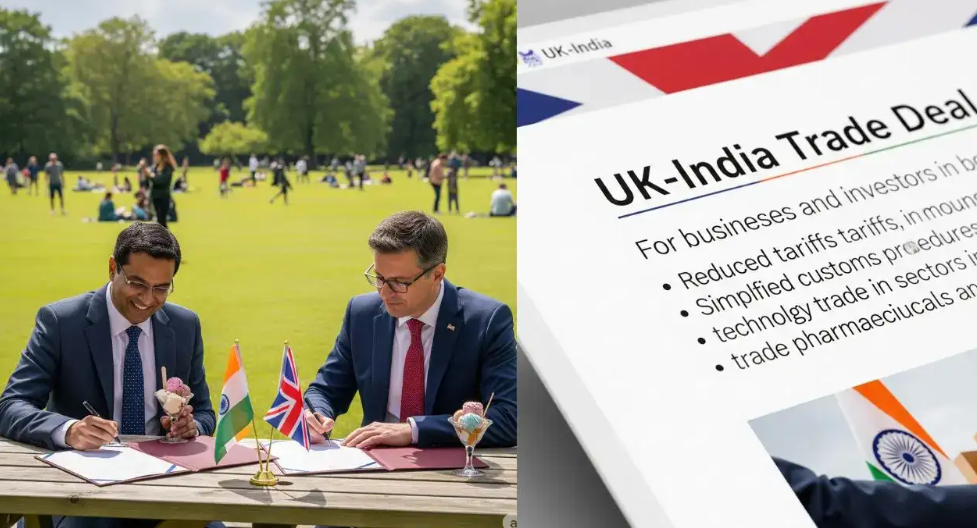
In a scene straight out of a movie, India and the UK
wrapped up a landmark Free Trade Agreement (FTA) not in a boardroom—but
during a casual stroll through London’s Hyde Park, with ice creams in hand.
India’s Commerce Minister Piyush Goyal and UK Trade
Secretary Jonathan Reynolds finalized the long-anticipated deal in May 2025,
marking the end of over two years of negotiations. The agreement is expected to
double bilateral trade to $120 billion by 2030, ushering in new
opportunities across goods, services, and investment.
For UK food producers and exporters, this trade deal unlocks
one of the world’s fastest-growing consumer markets:
- Lower
tariffs on British food and drink products—such as chocolates, cheese,
alcoholic beverages, biscuits, and breakfast cereals—make them more
price-competitive in India.
- Streamlined
export procedures and reduced regulatory friction help UK brands enter
the Indian market more easily, especially in premium and packaged food
categories.
- Growing
urban middle-class demand in India for international and gourmet
products presents a huge opportunity for UK retailers and
manufacturers to expand shelf presence.
- The
agreement also sets the stage for joint ventures, private label deals,
and food innovation collaborations between UK suppliers and Indian
distributors or supermarkets.
In short, the FTA gives UK food brands a stronger
foothold in India’s dynamic retail landscape, allowing them to tap into a
young, aspirational, and increasingly global-minded consumer base.